Cash Flow Forecast Template for Small Business: What to Include
Blog post descriptiDiscover what to include in a cash flow forecast template for small businesses. Learn the essential sections, financial elements, and practical tips to build an accurate cash flow forecast using Excel or Google Sheets.on.
SMALL BUSINESSES
Managing cash flow is one of the most critical responsibilities for any small business owner. Even profitable companies can experience serious financial difficulties if they do not manage cash properly. Bills, payroll, supplier payments, and operational expenses must be paid on time, and without a clear understanding of incoming and outgoing cash, business owners can easily find themselves facing financial pressure.
This is where a cash flow forecast template becomes extremely valuable. A well-designed cash flow forecast helps small businesses anticipate financial challenges, plan for growth, and make informed financial decisions.
Instead of reacting to cash shortages after they happen, a cash flow forecast allows business owners to see potential problems weeks or months in advance. With this insight, they can adjust spending, increase sales efforts, or secure additional funding before issues become critical.
In this guide, we will explore what a small business cash flow forecast template should include, why it is important, and how entrepreneurs can use it effectively to maintain financial stability.
What Is a Cash Flow Forecast Template?
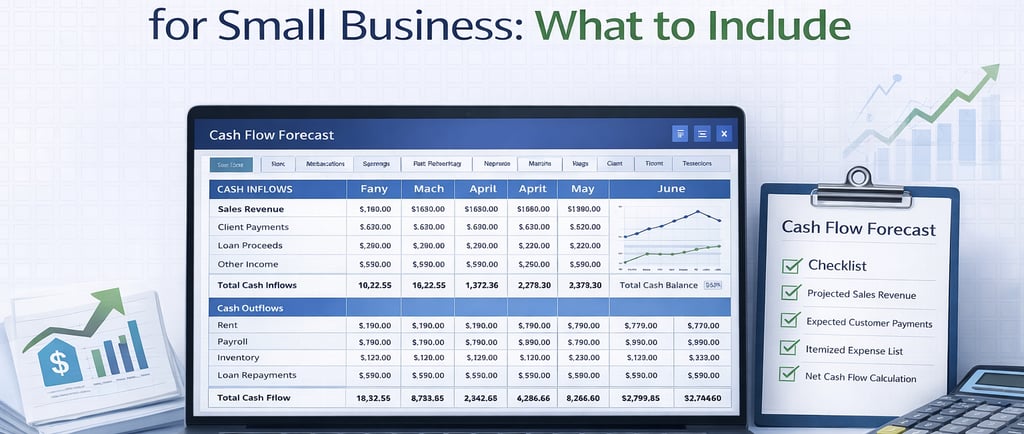
A cash flow forecast template is a structured financial tool used to estimate the movement of money in and out of a business over a specific period of time. Most small businesses create forecasts for the next three, six, or twelve months.
The template organizes financial data into categories that show expected income and expected expenses. By comparing these two numbers, business owners can understand whether their company will gain or lose cash during each period.
The purpose of the template is not to predict the future perfectly but to provide a realistic financial roadmap that helps guide decision-making.
Why Small Businesses Need a Cash Flow Forecast
Many small businesses focus heavily on sales and marketing but overlook financial planning. While generating revenue is important, cash management is what keeps the business operating day-to-day.
A cash flow forecast helps business owners in several ways.
Financial visibility
When a business tracks its expected income and expenses in advance, it gains a clear picture of its financial health. This visibility allows owners to plan ahead instead of making last-minute decisions.
Avoiding cash shortages
Unexpected expenses or slow customer payments can cause serious financial stress. A forecast helps identify potential shortages early so that corrective action can be taken.
Planning investments and growth
Expanding a business requires cash. Whether the goal is hiring new staff, purchasing equipment, or launching marketing campaigns, a forecast helps determine whether the business can afford these investments.
Improving financial discipline
Maintaining a cash flow forecast encourages business owners to regularly review their finances and stay organized with their financial planning.
Key Sections Every Cash Flow Forecast Template Should Include
A good cash flow forecast template should be simple, clear, and structured in a way that makes financial trends easy to understand.
Below are the essential sections every small business cash flow template should contain.
Opening Cash Balance
The opening cash balance represents the amount of money the business currently has available at the beginning of the forecasting period.
This figure typically reflects the balance in the company’s bank account. It acts as the starting point for the entire forecast.
The opening balance is important because it determines how much financial flexibility the business has before new income arrives.
Cash Inflows
Cash inflows represent all the money expected to enter the business during the forecast period. This section should include all sources of revenue and income.
Common inflow categories include:
• Sales revenue
• Client payments
• Product sales
• Service income
• Loan proceeds
• Grants or investment funds
• Refunds or reimbursements
For many businesses, customer payments will be the largest source of cash inflows. It is important to estimate when payments will actually be received rather than when the sale occurs.
Cash Outflows
Cash outflows represent all the expenses the business expects to pay. These costs may be fixed, variable, or occasional.
Typical outflow categories include:
• Office or store rent
• Payroll and contractor payments
• Inventory purchases
• Marketing and advertising costs
• Software subscriptions
• Utilities and internet
• Insurance payments
• Equipment purchases
• Loan repayments
• Taxes
Listing all expected expenses ensures that the forecast reflects the true cost of operating the business.
Net Cash Flow
Net cash flow represents the difference between total cash inflows and total cash outflows during a given period.
If inflows are greater than outflows, the business has positive cash flow. This means the company is generating more cash than it is spending.
If outflows exceed inflows, the business has negative cash flow. While occasional negative periods may be manageable, consistent negative cash flow can signal financial problems that require attention.
Closing Cash Balance
The closing cash balance represents the amount of cash remaining at the end of the period after accounting for inflows and outflows.
This figure becomes the opening balance for the next period. By tracking closing balances over time, business owners can see how their financial position evolves.
A declining closing balance may indicate the need to reduce expenses, increase revenue, or adjust financial planning.
Forecast Time Periods
A cash flow forecast template should include time periods across the top of the spreadsheet. Most small businesses track forecasts monthly, but some may prefer weekly forecasts for greater detail.
Monthly forecasts are useful for long-term planning, while weekly forecasts are helpful for businesses with frequent transactions or tight cash management.
Typical forecast horizons include:
• Three months
• Six months
• Twelve months
Longer forecasts provide a broader view of financial trends and future planning.
Expense Categories
Organizing expenses into clear categories helps business owners understand where money is being spent.
Examples of useful expense categories include:
• Operating expenses
• Marketing costs
• Payroll expenses
• Administrative expenses
• Technology costs
• Financial obligations
Breaking expenses into categories makes it easier to identify areas where costs can be controlled.
Income Categories
Income categories help businesses track where their revenue is coming from. This is especially helpful for companies with multiple products or services.
Examples include:
• Product sales
• Consulting services
• Subscription revenue
• Affiliate income
• Licensing revenue
Tracking these categories helps business owners identify which revenue streams are most profitable.
Cash Flow Summary Section
A useful template often includes a summary section that highlights key financial insights.
This may include:
• Total monthly income
• Total monthly expenses
• Net cash flow
• Closing cash balance
A summary allows business owners to quickly understand the financial situation without reviewing every detail in the spreadsheet.
Tips for Using a Cash Flow Forecast Effectively
Creating a cash flow template is only the first step. To get the most value from it, small businesses should use the forecast as an active financial management tool.
Update the forecast regularly
Business conditions change quickly. Updating the forecast weekly or monthly helps maintain accuracy.
Use realistic assumptions
Overly optimistic revenue projections can create misleading forecasts. Conservative estimates provide a more reliable financial picture.
Track actual results
Comparing forecast numbers with actual financial results helps improve accuracy over time.
Plan for unexpected expenses
Including a buffer for unexpected costs can help prevent financial surprises.
Why Google Sheets or Excel Is Ideal for Cash Flow Forecasts
Spreadsheet tools such as Google Sheets and Microsoft Excel are widely used by small businesses because they provide flexibility and customization.
These platforms allow business owners to organize financial data, adjust categories, and track performance without the complexity of full accounting software.
Spreadsheets also allow entrepreneurs to easily modify forecasts as their business grows or changes.
Final Thoughts
A cash flow forecast template is one of the most powerful financial planning tools a small business can use. It helps entrepreneurs understand their financial position, anticipate challenges, and make informed decisions about the future of their company.
By including key elements such as opening balances, cash inflows, expenses, and closing balances, small business owners can build a clear financial roadmap that supports stability and growth.
Using a simple spreadsheet template in Google Sheets or Excel allows business owners to maintain full visibility over their finances while keeping the process straightforward and manageable.
For entrepreneurs who want to simplify the process, using a professionally designed cash flow forecast template can save time and provide a reliable structure for financial planning.